

![6351354_439 [Converted]-01.png](https://static.wixstatic.com/media/3f4fbc_edf91a77d9d04e97a954954d9d321fb4~mv2.png/v1/fill/w_980,h_102,al_c,q_85,usm_0.66_1.00_0.01,enc_avif,quality_auto/3f4fbc_edf91a77d9d04e97a954954d9d321fb4~mv2.png)
When Sport Opens the Door: What Golf Australia Club Signals for Future Sport Growth

Updated: Jan 5

One of the hardest strategic questions in sport is this:
How do you protect the value of membership today, without closing off opportunities to grow the whole pie tomorrow?
Golf’s latest participation numbers, and Golf Australia’s response, are a live case study in that balancing act.
Golf is booming. So why change anything?
Golf in Australia isn’t in crisis. It’s flying.
More than four million adult Australians played some form of golf in 2024/25, the highest total ever recorded.
That’s one in five Australian adults who set foot on a course, driving range, simulator or mini-golf venue in the last year.
Traditional club membership has grown to around 477,000 members, up more than 24% since 2017/18, the strongest sustained period of club membership growth in three decades.
Growth is coming from younger, more diverse audiences, with big jumps in juniors, women and off-course formats like ranges, simulators and entertainment venues.
In other words: golf is already enjoying a rising tide. The interesting strategic question isn’t, 'How do we fix golf?'
It’s: 'What do you do when the game is already booming?'
Enter Golf Australia Club: giving the “outsiders” the core benefit

Alongside the latest participation report, Golf Australia has launched Golf Australia Club — a flexible subscription for regular golfers who don’t belong to a traditional club.
For $15 a month or $124 a year, subscribers get:
An official GA handicap
Full access to the GA app
Personal liability insurance
Unlimited social scores and a Golf ID they can use around the world
Crucially, this is aimed at the estimated 1.8 million Australians who play on-course golf regularly but aren’t club members.
Historically, that group has been “outside the tent”. In many sports, if you’re not a full member of a club affiliated to the governing body, you don’t get access to the sport’s most valued benefits — whether that’s:
A recognised handicap
Rankings and results
Priority access to competitions
Pathways and representative opportunities
Golf Australia Club flips that logic: it gives non-members one of the crown jewel benefits of membership (an official handicap) before they join a club.
That’s a big philosophical shift.
From closed shops to open ecosystems
Golf isn’t alone here. Across sport, there’s a long tradition of treating anything outside the traditional club model as a threat, not a partner.
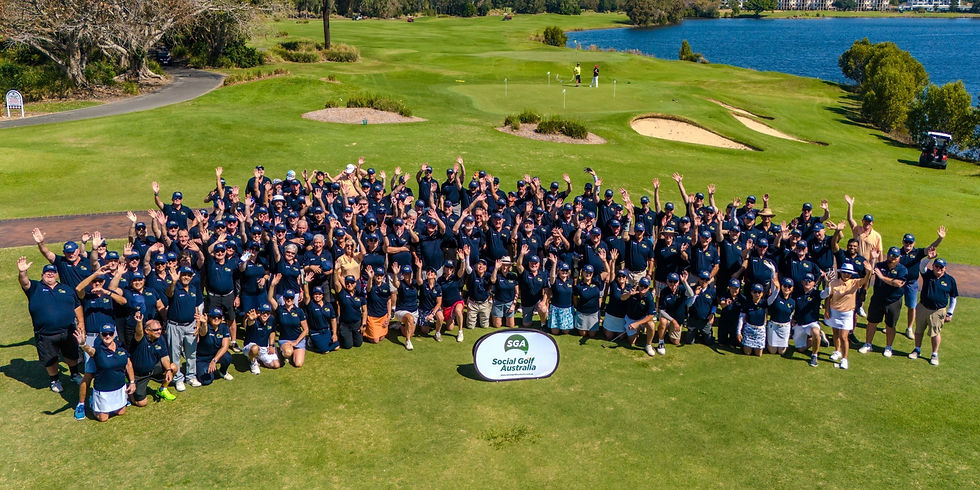
You can see this in the way some in golf have historically viewed organisations like Social Golf Australia - they offer legitimate, world recognised handicaps for thousands of casual golfers, and yet are sometimes seen as a competitor rather than a pipeline of future club members.
It’s the same pattern elsewhere:
Commercial venues, social leagues and digital platforms are treated as “competition”
Community programs are seen as separate, rather than integrated parts of the pathway
Benefits are locked up for full members, with little thought given to what’s offered to casuals on the edge
The problem with this approach is simple: most of your future sport growth now sits outside your four walls.
In golf’s case, millions of Australians are playing at public courses, ranges and entertainment venues, while only roughly 10% are club members. This is a similar pattern echoed in other sports where casual, social and pay-as-you-go options have outpaced traditional membership.
Treating those environments as “outside the system” doesn’t protect your sport. It limits it.
Why “grow the pie” thinking tends to win
The logic behind Golf Australia Club, and behind more open models generally, is a classic “rising tide lifts all boats” play:
Make it easier for people to participate on their terms. Let them come in through the door that suits their lifestyle: public courses, sims, social formats, flexible products.
Give them access to a meaningful slice of value early. In golf’s case, that’s an official handicap. In other sports it might be rankings, recognition, competition access or performance tracking.
Design a clear on-ramp into deeper engagement. Once people see themselves as “in the game”, the step into club membership, regular competition or volunteering feels natural rather than forced.
Not every subscriber or casual participant will convert into a traditional member — and that’s fine.
But by expanding the overall ecosystem, you grow:
The pool of future members
The audience for events and content
The base for sponsors and partners
The number of advocates willing to fight for facilities, funding and profile
What this means beyond golf for future sport growth
So what are the practical takeaways for other sports and active recreation organisations?
Here are a few starting points.
1. Design products for the “edge”, not just the core
If all your best benefits sit behind full membership, you’re putting a ceiling on growth.
Ask:
What’s our equivalent of a “handicap” - the thing people really value?
How could we make a lite version accessible to casual participants?
Could we offer flexible passes, social-only products, digital recognition or season-based “micro-memberships”?
The goal isn’t to devalue full membership. It’s to create stepping stones toward it.
2. Treat others as distribution partners, not threats
Growth increasingly happens in partnership:
Public facilities, commercial operators and leisure centres
Schools, universities and workplaces
Tech platforms, apps and online communities
In golf, public courses like Moore Park in Sydney are where huge volumes of casual players learn, play and connect — over 500,000 users a year in that one facility alone.
If your sport only recognises what happens inside traditional clubs, you’re missing where much of the action is.
The opportunity is to build joined-up offers: shared products, data, pathways and recognition that treat these environments as part of the same ecosystem, not a rival.
3. Map your “on-ramp” from first touch to lifelong involvement
Every sport should be able to answer:
If someone first experiences us in a social league, casual class or commercial venue…What’s the next step we want them to take?
How do our systems (registration, comms, technology) support that journey?
Are we making it easy for partners to play their part in that pathway?
Golf Australia Club is one version of that: turning regular non-club golfers into recognised, connected participants, and over time into potential club members.
4. Protect member value, but don’t over-protect it
There is a genuine tension here.
Boards and clubs are right to worry about:
Cannibalising membership
Undermining perceived value
Confusing the market with too many options
The answer isn’t to give everything away. It’s to layer value:
Make core experiences (playing, basic recognition, flexible access) more open
Reserve deeper benefits (governance voice, premium competitions, exclusive events, additional services) for members
This way, membership remains aspirational and valuable — but not the only way to belong.
The balancing act for sport leaders
Ultimately, the strategic challenge for any sport is getting the balance right:
How do you protect the benefits and value of membership today, without shutting the door on models that could grow the whole pie tomorrow?
Golf Australia’s move won’t be perfect. There will be bumps around implementation, perception and alignment with clubs.
But as a signal, it’s important.
It says: we’re willing to open up access to our core product to grow the overall game-trusting that, over time, more people in the water means more boats afloat.
For leaders across sport and active recreation, the question is:
Where are we still running a “closed shop”?
And what might happen if we designed our products, partnerships and pathways with a rising tide in mind?


Comments